
Animal Farm Foundation Fighting For Dog Owner Rights
Animal Farm Foundation brings dogs and people together to end discrimination. The organization works to provide lawmakers with information they need to create non-discriminatory laws & policies.
Holding Posts Edited in Blocks
Animal Farm Foundation brings dogs and people together to end discrimination. The organization works to provide lawmakers with information they need to create non-discriminatory laws & policies.

Shot across 11 countries with glorious 4K cinematography, the film is a kaleidoscopic collection of intimate portraits of everyday people and the dogs that share their lives.

Top Dog: Golden Retriever RACH U-CDX, URO 3 Ayrshire’s Time Will Tell UDX5 OM4 PUTD BN RAE4 RM4JH TKP CGC VC CCA RM JH TKP WC CCA VC CGC ~ Owned by Nancy & Jack Burns. Handled by Nancy.

As we just released our most recent OTCH listing this month we though the following article would be fun. Initially published in September 1977 Front & Finish. Russell Klipple and His Golden Retriever “Morland’s Golden Tonka UD” accumulated enough points to become the first obedience champion on Saturday, July 23, 1977. The following day Topbrass Cisco Kid and his owner, Pauline Czarnecki, earned their obedience championship.

How it used to be… Southside All-Breed Dog Training Club Inc. held their 24th Annual Obedience Trial on October 31st, 1971, on the main floor of the spacious Amphitheatre in Chicago Illinois.
There was no witchcraft involved, but we were bewitched with an entry of 512, comprised of 420 dogs. Entries represented the states of Illinois, Indiana, Michigan, Wisconsin, Minnesota, Missouri, and Iowa participated with n69 different breeds of dogs entered. Tied for first place for the largest entry were German Shepherd Dogs and Poodles with 76 dogs each.

Still excellent advice… If you do any kind of dog sport for any length of time, you soon learn that there is a lot of disappointment that goes along with playing the dog game. No matter how prepared you are, no matter how much you practice, on some days things just don’t go your way. How you deal with that disappointment can have a major impact on your attitude towards your hobby and your future success in the sport of dogs.
Let’s say that you’re going for an excellent leg.
It is a constant dilemma in our sport: How do we cultivate new participants? Clearly, exposure is a primary requirement for recruiting new handlers to join us. People can’t become interested in something if they don’t know it exists. News and television coverage reach a lot of people who might want to train their dogs. Unfortunately, the catch 22 is that you generally can’t get such coverage unless people already want to see it. So we have to find other ways to increase our exposure to the public. If we don’t, Obedience may slowly fade into history.

Remember Y2K? This one goes back a few years but their’s still some practical advice for Agility enthusiasts. ~ ~ ~ Welcome to Y2K! May this be a year full of fun and success for you and your agility teammate. The beginning of a New Year always makes us think of starting over fresh, beginning with a clean slate. So, in that spirit, let’s talk about starting off right with a new agility-prospect puppy. We get lots of questions from people who have never done agility before, but who want to do all the right things with their new pup. So, for those new handlers and new dogs here are a few good basics.
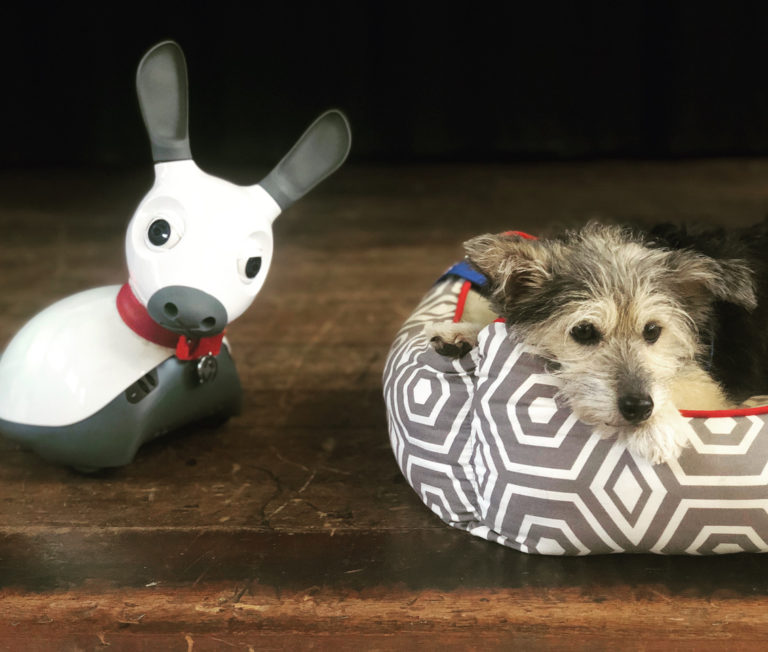
Look at this press release that came across my desk… Robots Could Replace Real Therapy Dogs ~ Robotic animals could be the ‘pawfect’ replacement for our real-life furry friends, a new study published today by the University of Portsmouth has found. Animals, especially dogs, can have therapeutic benefits for children and young people. A new paper, published in The International Journal of Social Robotics, has found that the robotic animal, ‘MiRo-E’, can be just as effective and may even be a better alternative.

Animal Farm Foundation has announced the launch of Pets Together, a free virtual program that allows those who are socially isolated due to the COVID-19 pandemic to enjoy friendly interaction with pets (including dogs, cats, goats, horses, and other critters) and people. The goal of the program is to increase social connection and mitigate the loneliness that is a painful aspect of the pandemic.